
| Research Projects |
Longevidade + (since 2025)
Longevidade+ is a strategic community-based programme for active and healthy ageing that grows out of and expands the MEMO_MOVE project, scaling it up to the entire municipality of Fundão. Building on the evidence and experience generated by MEMO_MOVE, Longevidade+ integrates several complementary components that combine multicomponent physical exercise, cognitive stimulation, digital tools, health literacy and social participation, creating a coherent ecosystem of services for holder adults in different contexts (institutions, community settings and home-based support).
The programme was conceived and founded by Catarina Rondão, PhD student in Sport Sciences at UBI and CIDESD researcher, as a way of translating the MEMO_MOVE model into a broader municipal strategy for longevity and territorial cohesion. Using the territory as a real-life laboratory, Longevidade+ aims to delay dependency, preserve functional autonomy and promote quality of life and social inclusion in older adults, while generating data that can inform public policies on ageing in low-density regions.
Longevidade+ is led by the Municipality of Fundão, with scientific coordination from UBI/CIDESD (notably the MEMO_MOVE team led by Dulce Esteves) and UTAD/CIDESD, and involves a multidisciplinary network of local social and health institutions and exercise professionals responsible for on-the-ground implementation.
AcTIon: Accelerating Therapeutic Innovation for Healthier Longevity (since 2025)
AcTIon is an integrated research programme led by the University of Beira Interior that aims to accelerate therapeutic innovation to respond to population ageing and promote healthier longevity. In a context where the proportion of adults aged 65+ is projected to grow sharply in Portugal over the coming decades, AcTIon brings together a multidisciplinary consortium to provide a coordinated response that spans drup discovery, advanced biotherapeutics, exercise science and artificial intelligence for mental health. The project is funded by the Centro 2030 Regional Programme (CENTRO2030-FEDER-02609900, co-financed at 85% by the European Regional Development Fund-FEDER), with a total budget close to €900,000.
The scientific work is organized into four complementary activities:
- Drug discovery and repurposing for neurological and oncological diseases (epilepsy, Parkinson’s disease, prostate cancer and glioblastoma), including the pre-clinical evaluation of new small-molecule candidates in terms of efficacy, safety, antimicrobial potential and brain-barrier permeability.
- Therapeutic genes and proteins, focusing on the identification of disease-causing genetic variants and the development of advanced biopharmaceuticals and nanomedicines (including intranasal delivery strategies) with neuroprotective or anticancer action.
- Exercise and ageing, led by researchers from Sport Sciences/CIDESD, assessing how different configurations of strength-training volume affect physical fitness, cognitive function, psychological, physiological and social outcomes in institutionalised older adults, as well as the implications for institutional management and well-being.
- AI, data analytics and digital technologies in mental health, dedicated to designing and testing new AI-based models for clinical decision support, remote monitoring and virtual therapist solutions using embodied conversational agents and real-time multimodal data.
By articulating these four pillars, AcTIon aims to bridge basic, clinical and applied research, generating new pharmacological and biological candidates, evidence-based exercise strategies and innovative digital tools that together contribute to more effective prevention, diagnosis and treatment pathways for conditions associated with ageing. The programme is coordinated by PI Adriana O. Santos (RISE-Health, UBI) and involves a core team of activity leaders: Samuel Silvestre (drug discovery and repurposing), Diana Costa (therapeutic genes and proteins), Daniel Marinho (exercise and ageing, Sport Sciences/CIDESD) and Sebastião Pais (AI and digital Technologies in mental health), supported by a multidisciplinary group of researchers from RISE-Health, CIDESD, NECE, CMA-UBI, CIES-UBI, NOVALINCS AND IT.
More information is available at: https://www.ubi.pt/Noticia/8133

Exercise4Brain (since 2025)
Exercise4Brain is a research and community intervention programme developed by researchers from the Department of Sport Sciences of the University of Beira Interior (DCD-UBI), integrated in CIDESD, and funded with €240,000 through the FCT IC&DT PT2030 call, with additional FEDER support (COMPETE2030-FEDER-00851900).
The project addresses progressive cognitive decline, one of the leading causes of dependency worldwide, by using resistance training as a promising non-pharmacological therapy to preserve autonomy and daily living function in individuals with mild to moderate cognitive impairment. Its main objective is to conduct a pioneering longitudinal study to understand how different volumes of supervised, individualised strength training influence cognitive function and brain structure, combining repeated assessments of cognition, physical performance, neuroimaging and blood biomarkers.
The multidisciplinar research team is led by Professor Mário Marques (Principal Investigator, DCD-UBI/CIDESD) and includes Dulce Esteves, Henrique Neiva, Daniel Marinho, Diogo Marques and Nuno Fonseca (Sport Sciences – UBI/CIDESD), together with Assunção Vaz Patto and Carla Fonseca (Faculty of Health Sciences – UBI), Ana Torres (Department of Psychology and Education – UBI), Jorge Costa (clinical psychologist) and Mikel Izquierdo (Public University of Navarre).
More information is available at: https://www.ubi.pt/Entidade/exercise4brain and https://www.ubi.pt/Noticia/8001
HY-FIT: Exercise in Hypertension (since 2025)
HY-FIT is a clinically integrated exercise and research programme developed by the Department of Sport Sciences of the University of Beira Interior (DCD-UBI), in close collaboration with the Open Hypertension Consultation team of the Local Health Unit of Cova da Beira (ULSCB).
Targeting adults with arterial hypertension from the Cova da Beira region, HY-FIT aims to reduce blood pressure through rigorously prescribed, individualised exercise based on the latest scientific evidence, while determining the impact of a combined isometric strength and aerobic training programme on blood pressure, physical fitness and health-related quality of life, increasing literacy on hypertension and cardiovascular risk factors, and improving adherence to pharmacological treatment.
The academic team from DCD-UBI includes Diogo Marques, Dulce Esteves, Henrique Neiva and Mário Marques, in partnership with the ULSCB clinical team led by Prof. Dr. Miguel Castelo-Branco, Dr. Manuel de Carvalho Rodrigues, Nurse Cláudia Mingote, Nurse Cristina Lourenço and Nurse Maria Judite Sraiva, and na on-the-ground Sport Sciences team coordinated by Nuno Fonseca, with collaboration of Master’s students in Sport Sciences. More information is available at: https://www.ubi.pt/Evento/23276
TrackFrailty: Track to Prevent, Mitigate, and Reverse Frailty (since 2025)
TrackFrailty is a research project developed by a team from the Department of Sport Sciences (DCD) of the University of Beira Interior (UBI), integrated in CIDESD, and funded with €100,000 through the highly competitive Social Research Call 2024 of the Observatório Social da Fundação “la Caixa” /BPI, in which only 17 projects were approved from more than 400 applications after a rigorous evaluation process that included a public hearing.
Focusing on physical frailty in older adults living in nursing homes (ERPI) in the Cova da Beira region, a priority and underserved area in terms of community-based health and social interventions, the project aims to quantify the prevalence of physical frailty in institutionalized older adults and to analyse the chronic effects of resistance training with different volumes (real effort dose) on the prevention, mitigation and reversal of frailty.
In parallel, TrackFrailty seeks to contribute to the specialization of Sport Sciences professionals from UBI in the assessment and treatment of frailty in institutional contexts, providing better diagnostic information on the syndrome and supporting clinical decision-making, functional autonomy, well-being and social inclusion in a vulnerable population and region.
The project is led by Professor Mário Marques (Principal Investigator, Department of Sport Sciences – UBI/CIDESD), with a core team including Henrique Neiva, Daniel Marinho, Diogo Marques and Dulce Esteves (Department of Sport Sciences – UBI/CIDESD), and the collaboration of Assunção Vaz Patto (Department of Medical Sciences – UBI), Ana Torres and Jorge Costa (Department of Psychology and Education – UBI), and Mikel Izquierdo (Public University of Navarre). More information is available at: https://www.ubi.pt/Noticia/7845

MAMA_MOVE (since 2015)
MAMA_MOVE is a supervised, community-based exercise programme developed at the University of Beira Interior (UBI) for adults living with or beyond cancer, regardless of tumour type. It offers structured, tailored exercise sessions designed to counteract the side effects of oncological treatments, such as fatigue, loss of muscle strength, reduced range of motion and decreased functional capacity, promoting improvements in physical fitness, quality of life and psychological well-being. Participation is free of charge, and sessions take place in a fully supervised enviornment at the Department of Sport Sciences.
Beyond its clinical and social impact, MAMA_MOVE has a strong research component. The team systematically collects and analyses data from the exercise sessions, which has already resulted in multiple national and international conference presentations and scientific awards, contributing to the growing evidence base in exercise oncology and survivorship care.
In parallel, the programme plays an active role in healthy literacy and community engagement. MAMA_MOVE regularly participates in awareness campaigns and community events (such as Pink October, Blue November and school-based initiatives), helping to demystify cancer, promote exercise as part of treatment and recovery, and disseminate its work, mission and values to the wider community.
The programme is supported by a solid network of institutional and community partners that ensures it remains completely free for participants. MAMA_MOVE is currently led by a multidisciplinar team from UBI, comprising faculty members Dulce Esteves and Henrique Neiva (co-coordinators), together with Ana Torres, Carla Fonseca, Mafalda Fonseca, Cristina Monteiro and Samuel Silvestre, and a group of student collaborators: Ricardo Madeira, Adriana Maia, Ana Antunes, Leonor Anjos, Mariana Ferreira e Mariana Pinheiro.
Further information and media coverage:
- https://www.ubi.pt/Pagina/mama_move
- https://noticiasdacovilha.pt/wp-content/uploads/2024/02/5940_edicao_completa1.pdf
- https://expresso.pt/iniciativaseprodutos/projetos-expresso/2023-10-17-Projetos-de-investigacao-conquistam-280-mil-para-a-oncologia-e-virologia-e7bef73c
- https://www.rtp.pt/play/p8130/e759126/sociedade-civil
- https://sicnoticias.pt/saude-e-bem-estar/2025-11-02-video-universidade-da-beira-interior-cria-programa-de-ginastica-gratuito-para-mulheres-com-cancro-da-mama-e34fd71f
- https://open.spotify.com/episode/4Hr9hpJMMxOxoPbYU5NCQ9
Contacts:
962076801 (Ricardo Madeira) / 935213951 (Adriana Maia)
mama.move.ubi@gmail.com
MEMO_MOVE (since 2020)
MEMO_MOVE is a community-based exercise and cognitive-stimulation programme integrated in CIDESD that targets older adults with mild cognitive impairment or early-stage dementia, helping to slow cognitive decline and maintain fucntional autonomy. Promoted by Fundão City Council in partnership with UBI/CIDESD, it combines structured multicomponent physical exercise with cognitive stimulation in dual-task format, challenging motor skills and higher-order functions such as memory, attention, language, reasoning and problem-solving.
The programme was originally conceived and founded by Catarina Rondão, PhD student in Sport Sciences at UBI and CIDESD researcher, who has played a key role in its design, implementation and continuous development in close collaboration with local institutions. Over the years, MEMO_MOVE has also evolved into an innovative ecosystem that includes the MEMO_MOVE PLAY digital platform, developed within the European URBACT-SIBdev Project, and has been recognised as a good practice in active and healthy ageing at national and international level.
Scientifically led by Dulce Esteves (UBI/CIDESD), with co-coordination from colleagues at UTAD/CIDESD, MEMO_MOVE has generated several master’s and PhD projects and peer-reviewed publications showing benefits in physical fitness, cognitive performance, perceived quality of life and social inclusion among participants.
More information is available at: https://www.ubi.pt/Noticia/7220 Project website: https://memomove.wixsite.com/memomove
LINEup
 The project’s main objectives are:
1) Systematize and analyze existing data at national and regional level to assess
trends in educational inequalities over time in Europe;
2) Describe the implementation processes and the impact of effective educational interventions in reducing educational inequalities.
The participant institutions of this project are:
- Fondazione per la Scuola della Compagna di San Paolo, Italy;
- Universita Degli Studi di Macerata, Italy;
- Instituto Nazionale per la Valuatione del Sistema Educativo di Istruzione e di
Formazione, Italy; - Universidad Pompeu Fabra, Spain;
- Institut National d’Études Demographiques, France;
- Karlsruhe University of Education, Germany;
- University of Piraeus Research Center, Greece;
- Centre of Planning and Economic Research (KEPE), Greece;
- European Grants International Academy SRL;
- Institouto Technologias Ypologiston Kai Ekdoseon Diofantos, Greece;
- Leibniz-Institut fur Bildungsverlauf e. V., Germany;
- Universidade de Trás-os-Montes e Alto Douro (UTAD), Portugal.
- Universitat Autònoma de Barcelona – UAB; Spain
CIDESD is the only Portuguese research center and UTAD is the only Portuguese university participating in consortia of European organizations in projects financed by his specific funding line: HORIZON-CL2-2023-TRANSFORMATIONS-01-06 Mapping of longitudinal data and assessment of inequalities in education, training and learning achievements.
The Principal investigator (PI) in Portugal is Professor Paulo A. S. Moreira
(pmoreira@utad.pt) , Department of Education and Psychology (DEP), School of
Human and Social Sciences (ECHS), University of Trás-os-Montes and Alto Douro
(UTAD), who is also integrated researcher in CIDESD.
Funding: 2.814.203,75 € (two million, eight hundred and fourteen thousand, two hundred and three euros and seventy-five cents).
Begining: 01 – 02 – 2024;
End: 31-01-2027
For more information, consult the LINEup project website, where you can also subscribe to the Newsletter and – in this way – receive news of the project’s main developments.
https://www.lineup-project.eu/
Train for Brain
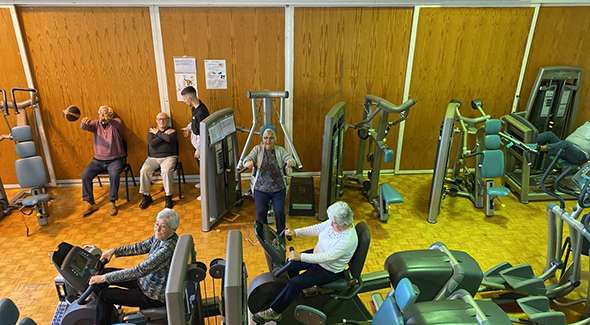
Train4Brain is a community-based research and exercise programme developed by a team from Department of Sport Sciences of the University of Beira Interior (DCD-UBI), integrated in CIDESD, which implements scientifically grounded resistance training protocols to preserve and improve cognitive function and functional capacity in older adults with mild dementia living in nursing homes (ERPI) in the municipality of Covilhã, currently extended to autonomous community-dwelling older adults through “Train4Brain Community”.
Supported by the Programa Nacional de Desporto para Todos (PNDpT 2023) of the Portuguese Institute of Sports and Youth (IPDJ), the programme envolves more than 100 older adults and combines physical, cognitive and biochemical assessments before and after training, aiming to identify the optimal training “dose” for active and healthy ageing in this vulnerable population.
Led by Professor Mário Marques (Principal Investigator, DCD-UBI/CIDESD), the core team includes Dulce Esteves, Henrique Neiva, Daniel Marinho and Diogo Marques (DCD-UBI/CIDESD), Nuno Fonseca (PhD student in Sport Sciences), Carla Fonseca (Department of Medical Sciences – UBI, responsible for biochemical markers) and Jorge Costa (Department of Psychology and Education – UBI, responsible for cognitive assessments).
The scientific and social relevance of Train4Brain has been recognised both through national funding and through the Prémio de Boas Práticas de Envelhecimento Ativo e Saudável na Região Centro, in the “Conhecimento+” category.
More information is available at: https://www.ubi.pt/Noticia/7686 and https://www.ubi.pt/Noticia/7649
https://www.ubi.pt/Noticia/7649
https://www.ubi.pt/Noticia/7686
Stop Ageing
(2021)
https://www.90segundosdeciencia.pt/episodes/ep1199-mario-marques/
https://www.ubi.pt/Noticia/6958
https://www.ubi.pt/Noticia/6989/STOP-AGEING-inicia-treinos-com-os-idosos-na-Misericordia-do-Fundao
https://www.ubi.pt/Noticia/7119
https://www.ubi.pt/Evento/10884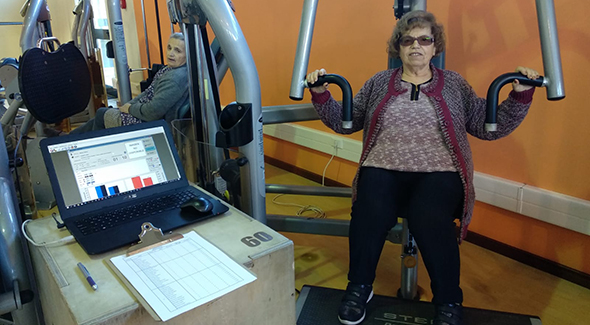
NanoStima
(2016-18)

Macro-to-Nano Human Sensing: Towards Integrated Multimodal Health Monitoring and Analytics
HeProject promoted by INESC TEC (Institute for Systems and Computer Engineering, Technology and Science) in which CIDESD has a strong participation by leading one research line, related to health data collection and visualization.
CIDESD team comprises 17 integrated researchers from six different institutions from the consortium and 21 hired scholarships helping to develop the programs Extra4Health, AquaStima and Passus Saudáveis – Peripheral Arterial Disease.
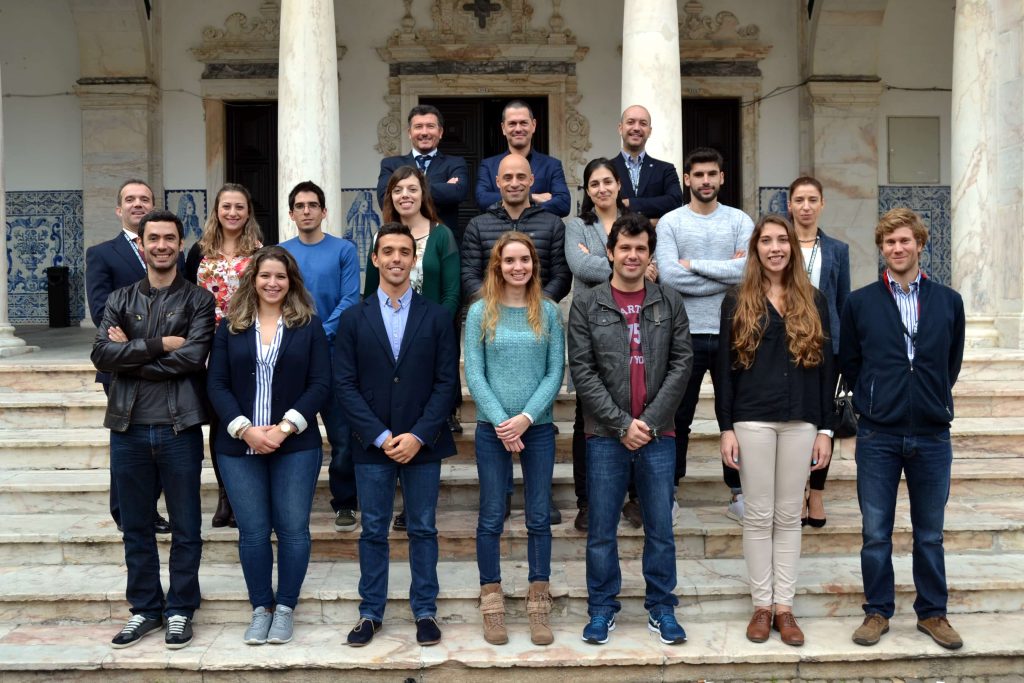
The project NanoSTIMA envisions a future where humans will be wearing, on and in their body dozens of micro and nano sensors that will monitor a multitude of physiologic indicators of our complex body. There are two main challenges to be approached for this envisioned paradigm become a reality: evolve from today’s macro to tomorrow’s micro and nano human sensing technologies that will be key players in the coming revolution that will occur in the health and wellbeing industry; tackle the tons of information all these wearable and implanted sensors will generate, integrating it with data from other sources, such as medical records, genetic data and even social media and use it to draw a broad picture of the patient as an individual, in order to offer a tailored healthcare.
Deus ex Machina
(2016-18)

Symbiotic Technology for Societal Efficiency Gains
This is a project promoted by Fraunhofer Portugal AICOS in which CIDESD has a strong participation by leading one work package related to activity monitoring. The project is built under the idea that societies are striving for new elements towards efficiency gains mediated by a symbiotic relationship of humans with technology.
The project goals are concentrated on understanding the environment, the user, their context and actions, with the purpose to provide building blocks to study relevant societal challenges within scientific domains in relation to humans, in order to design ‘companions’, which are non-intrusive, assistive tools for everyday life.
The activity monitoring is focused in developing tools to monitor physical, cognitive and behavioural activities and use this knowledge to automatically define recommendations and interventions tailored for each person. Teams of sports players, security personnel or firefighters are also targeted, identifying variables that describe collective behaviour and combine this information with the perception of the environment in order to make crucial real-time decisions.
CIDESD research team comprises 6 integrated researchers from two different institutions from the consortium and 4 hired scholarships.